Great to meet you at Electronica 2026
Everything you need to explore AntennaWare further and deliver wireless solutions that offer unrivaled performance and reliability for wearables and other difficult platforms
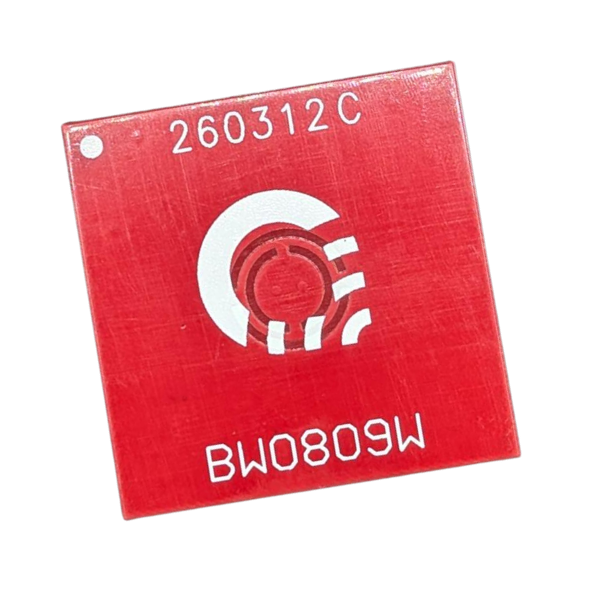
Sub-GHz embedded and external antenna
The first viable low profile replacement for monopole antennas for wearable and on-metal applications
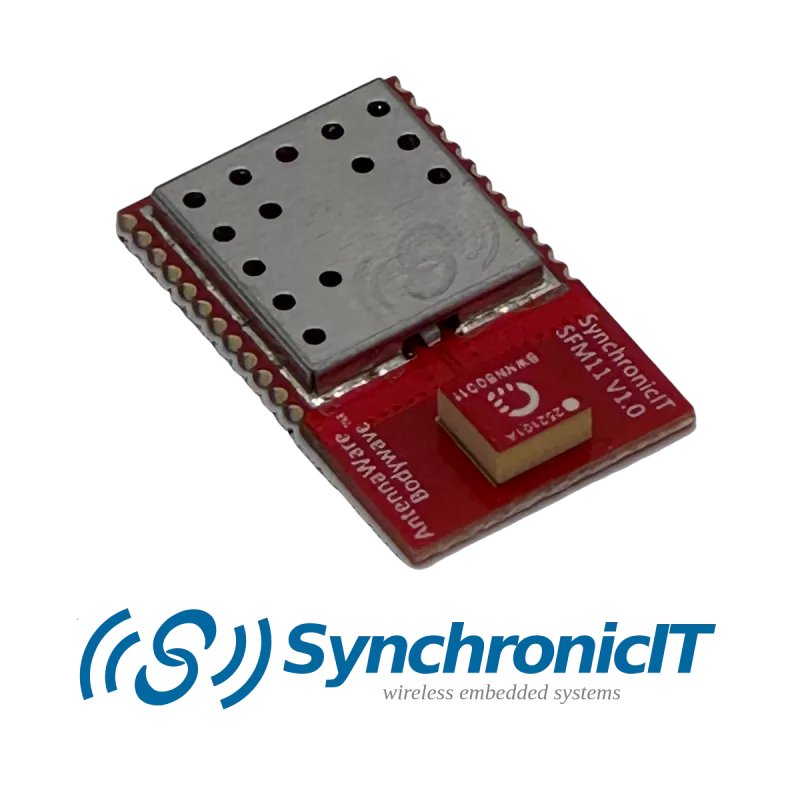
SFM11-MOD by SynchronicIT
The SFM11-MOD is an Ultra-Wideband (UWB) module built around the NXP Trimension™ SR048. The SR048 combines a microcontroller, security extensions, and UWB radio circuitry on one programmable chip, and complies with IEEE 802.15.4z.
The module is designed for mobile and wearable electronics. All decoupling capacitors needed to stabilise internal voltages are on board, so few external components are required. A dedicated antenna handles UWB transmission and reception.
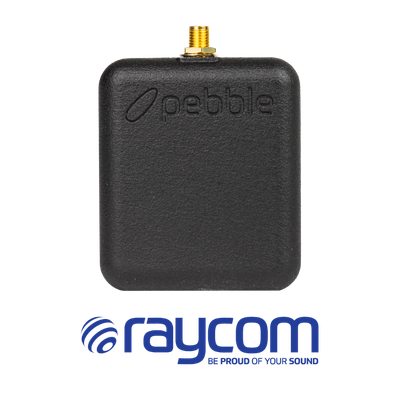
Sub-GHz Wireless Audio: Viviana Pebble by Raycom
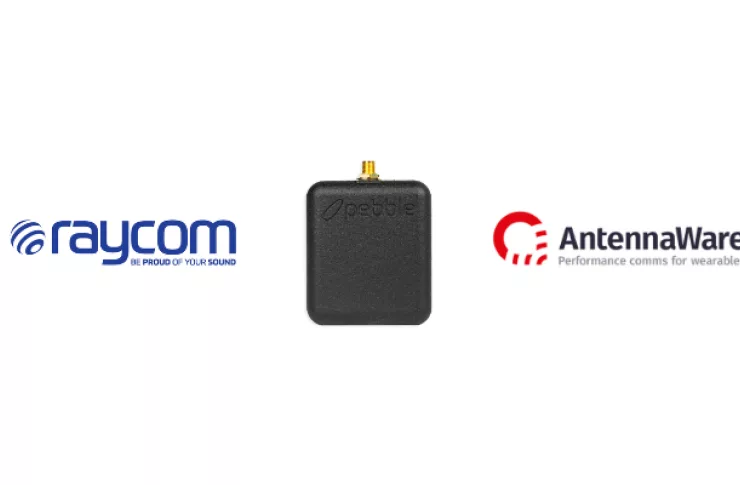
The Viviana Pebble by Raycom uses a sub-GHz BodyWave™ antenna to replace the whip antenna on wireless microphone transmitters worn in TV and film production, resulting in over double the distance in audio capture in Non-Line-of-Sight (NLoS) conditions. Watch the demo video at our booth.
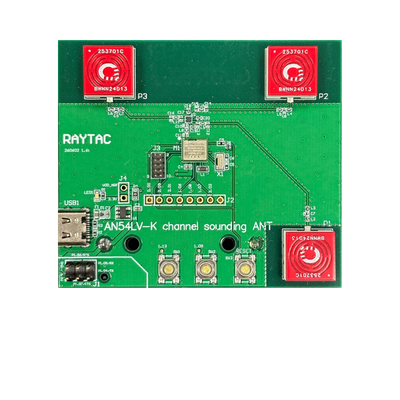
AN54LV-K15 by Raytac
The AN54LV-K15 is a BLE Channel Sounding module by Raytac, a wireless module manufacturer headquartered in California, USA, with production in Taiwan. The AN54LV-K15 development kit pairs the module with three BodyWave™ antennas to evaluate BLE Channel Sounding for applications such as asset tracking and localization across different orientations and RF environments
Live VNA Comparisons
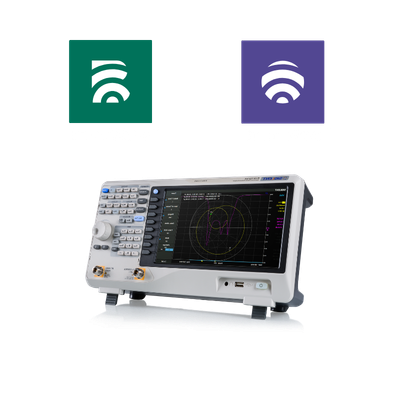
A vector network analyser (VNA) measures how well an antenna is matched to its operating frequency. Detuning shows up directly. When a conventional antenna is placed on the body or on metal, its resonance shifts away from the band it was designed for.
Measured between a transmitting and a receiving antenna, path gain shows how much transmitted power reaches the receiver. It captures energy absorbed by the body or the platform, as well as losses from detuning.
On the body, part of the signal travels as a creeping wave, following the body’s surface around to the receiver. In Non-Line-of-Sight (NLoS) conditions, this is often the main path. Antennas polarised normal to the body surface launch creeping waves more effectively, which raises path gain where the direct path is blocked.
The VNA compares the resonant frequency and path gain of commercially available antennas, including chip, printed, and flared monopole designs, with BodyWave™ on the body and Omni-Wave™ on metal. The results are relevant to sectors including medical, automotive, RTLS, wireless audio, and distributed sensing.